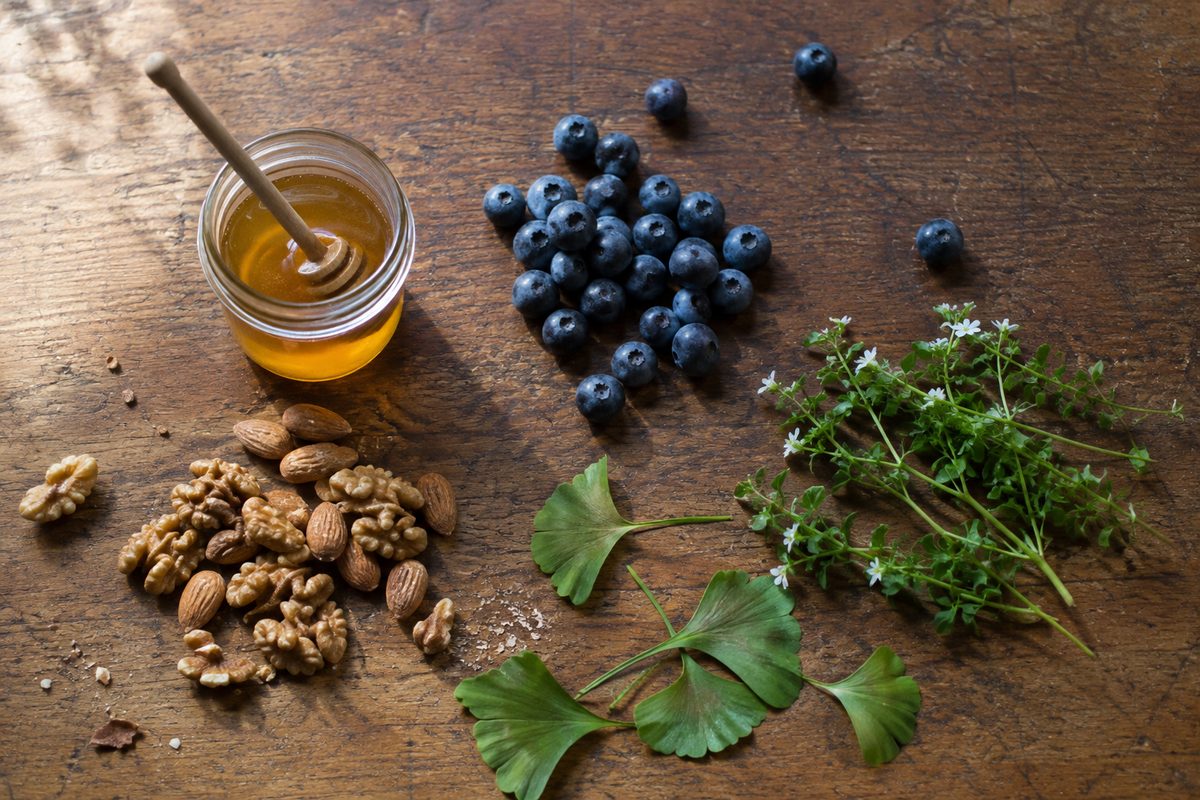
Walking into a room and forgetting why. Asking the same question twice in one conversation. Losing the thread of a sentence halfway through. These moments are ordinary, they happen to almost everyone, and they are almost impossible to think clearly about while they are happening.
The problem is that memory is a terrible judge of memory. Ask anyone whether their week was foggy and they will answer from whatever mood they are in right now.
Which is why the suggestion in this article is not a diet, a product, or a promise. It is a notebook and fourteen days.
Write down the time whenever your head goes briefly blank. Not the story, just the time. After two weeks you will have something better than an impression: you will have a column of numbers that either clusters somewhere or does not.

From our sponsor
Watch the sponsor's presentation
This page is sponsored. The advertiser's video presentation is below, and it leads to a product page.
Watch the presentation Advertisement. Free to watch, no sign up.Three explanations people reach for first
All three are plausible. The point of writing the times down is that a notebook can tell you whether any of them fit you.
Age
Usually the first explanation offered, and the hardest to test, because it predicts a slow and steady change. If your entries spike on some days and go quiet on others, whatever is driving them is moving faster than a birthday.
Sleep, on its own
Easy to assume the worst days follow the shortest nights. Worth checking rather than assuming, because sleep is one input among several and it is the one people notice most.
Being busy
The explanation everyone volunteers. It is also the easiest to disprove with a notebook, since busy weeks and quiet weeks are simple to label as you go.
The value of the exercise is not the conclusion. It is that you stop arguing from memory about memory and start looking at timestamps.
What people most often report finding, when they do write the times down, is that the entries are not spread evenly across the day. They tend to bunch into a window. Where that window sits is the interesting part, and it is different from person to person.

Comparing notes with someone else running the same exercise makes the pattern easier to see. Stock photograph, posed by models.
Why the first meal is worth testing
Once entries are sorted by time of day, the obvious next question is what came before the window.
For a lot of people the honest answer about the first four hours is coffee, something eaten standing up, or nothing at all until late morning. That is not a moral failing and it is not unusual. It is simply a variable, and it happens to be one of the few that is easy to change on purpose for a week.
None of this is a revelation. Anyone who has skipped breakfast knows the feeling. What a notebook adds is the difference between knowing it vaguely and seeing whether it actually tracks for you.
So rather than trying to fix the afternoon directly, the thing to test is the first meal.

From our sponsor
Watch the sponsor's presentation
A paid presentation from the advertiser who sponsored this article. It leads to a product page.
Watch the presentation Advertisement. Free to watch, no sign up.A day shape worth trying for a week
Nothing here is strict. It is a rhythm, not a rulebook, and the point is that it is simple enough to keep for seven days.
Sit down and eat something real
Fat, protein, some colour. Sitting down appears to matter as much as the food itself, if only because eating standing at the counter tends to mean eating less and noticing less.
Water before more coffee
The second and third coffee are often covering for a glass of water that never happened. Swapping the order is a small change and an easy one to test.
Ten minutes outside, ideally walking
The easiest change on this list and the one most likely to be skipped. Ten minutes of daylight and movement is a low bar to clear.
Finish dinner a little earlier than feels natural
Not fasting, not a rule. Simply eating before tiredness sets in rather than alongside it.
What ended up on the plate
These are foods, not prescriptions. They are on this list because they keep well, need almost no preparation, and are easy to actually eat on a weekday.
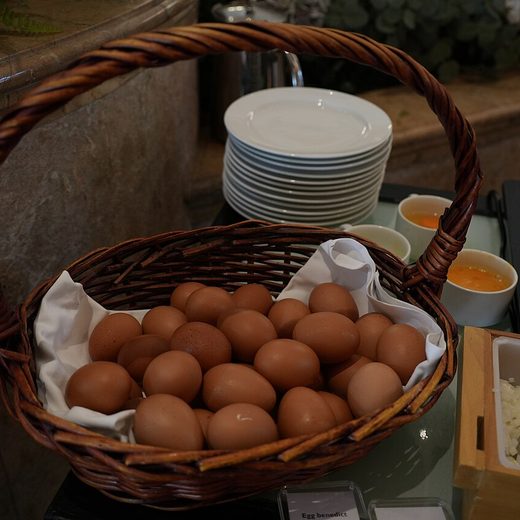
Free range eggs
What makes a sit down breakfast realistic on a weekday. Two eggs takes six minutes, which is the difference between eating and meaning to eat.
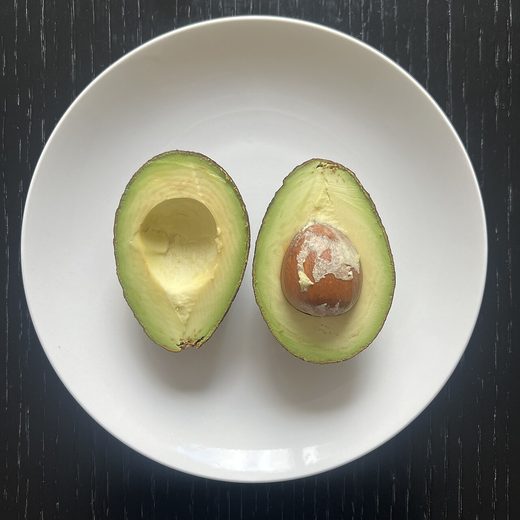
Ripe avocado
Half an avocado turns breakfast from something you are hungry after into something that holds until lunch. Cheap, and it needs no cooking.
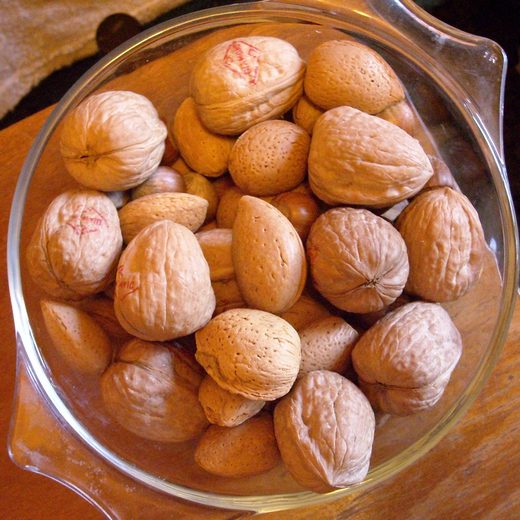
Walnuts and Brazil nuts
Best kept in a jar on the counter, in plain sight. A small handful mid morning is what stops the eleven o'clock rummage through the biscuit tin.
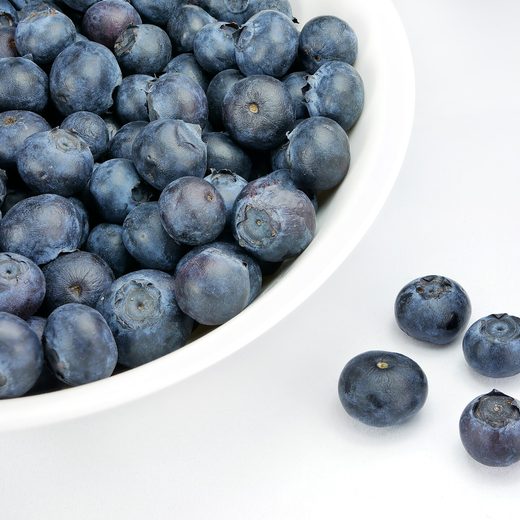
Blueberries
Frozen works better than fresh for most households, because fresh ones spoil before the punnet is finished and then nobody buys them again.

Raw honey
A spoonful in place of sugar. Mostly it is what makes the rest of the plate pleasant enough to still be eating it in week two.

Fresh orange
Squeezed over the avocado, which sounds odd and is not. It also keeps the plate from going brown while you find your glasses.
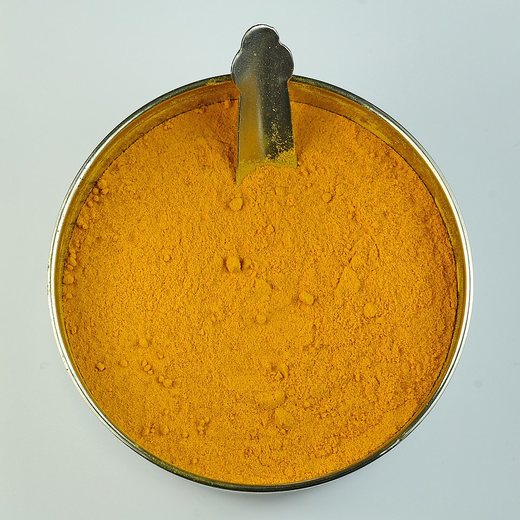
Turmeric and black pepper
Always together. Piperine, the compound that makes pepper taste like pepper, substantially improves how much curcumin the body takes up.
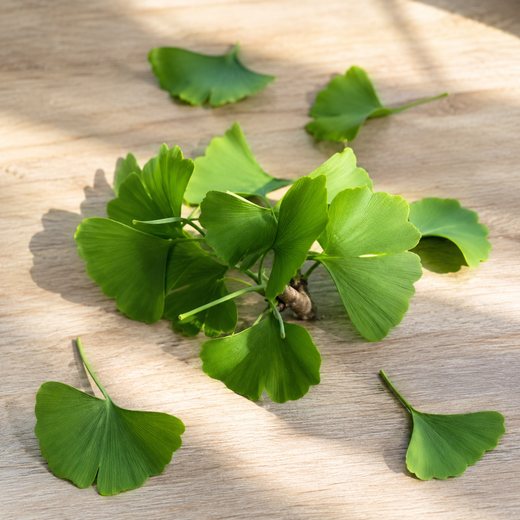
Ginkgo biloba
As a tea in the afternoon rather than a fourth coffee. One of the longest standing botanicals in traditional wellness practice, and a decent excuse to sit down.
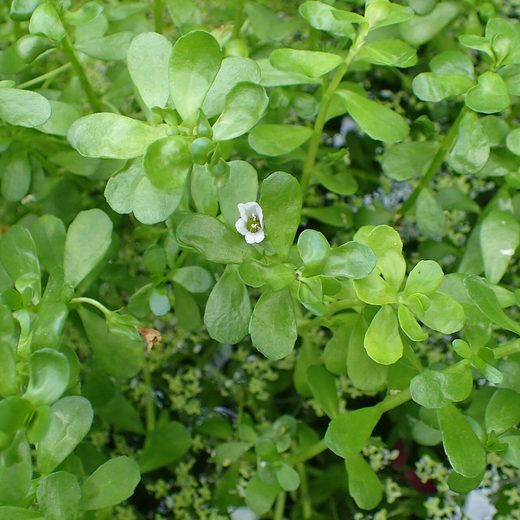
Bacopa monnieri
A herb used for centuries in traditional Ayurvedic practice and one of the more studied plants in this category. Also taken as an afternoon tea.
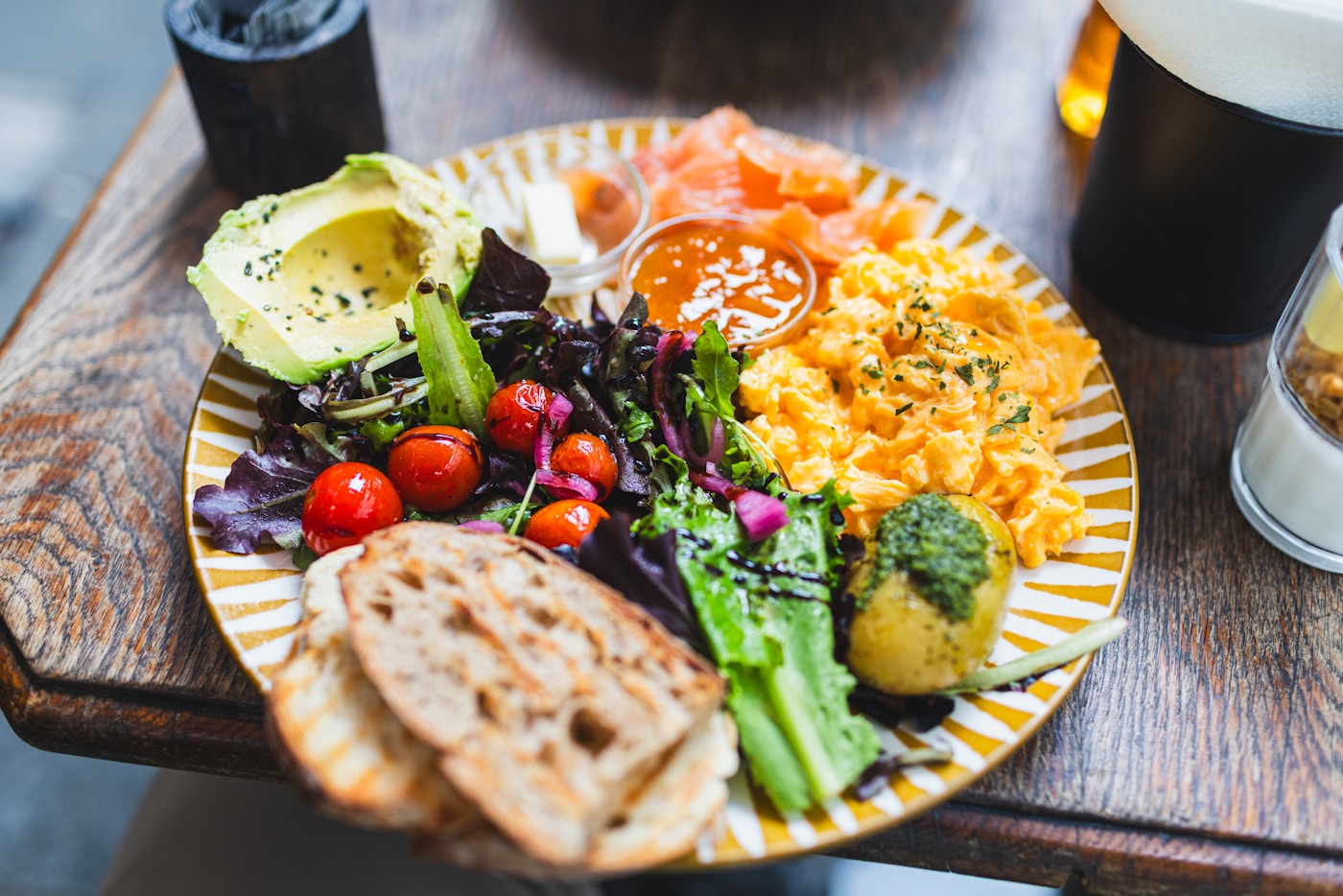
Ten minutes, one pan, and no special shopping. That was the whole bar it had to clear. Stock photograph.

From our sponsor
Watch the sponsor's presentation
Two eggs, half an avocado, a handful of nuts, a spoon of honey, turmeric with pepper. The advertiser's video covers their own product.
Watch the presentation Advertisement. Free to watch, no sign up.The two week check
If you want to know whether any of this applies to you, this is cheaper and faster than reading more articles like this one.
Do this instead of taking anyone's word for it
- Get a notebook and put it somewhere annoying. Next to the kettle, next to the front door. Somewhere you cannot avoid it.
- Write the time, not the incident. One line, such as "2:40, forgot why I came upstairs." You are collecting timestamps, not stories.
- Change nothing for seven days. This is the part everyone skips and it is the only part that makes the second week mean anything.
- Week two, sit down and eat a real breakfast. Every day. Same rough shape. Keep writing the timestamps.
- Compare the two columns. Not how you felt. How many lines are in each week, and what time they landed.
Whatever the two columns show, they are one person, one notebook, and no control group, which is exactly as much weight as the result deserves. What it does give you is your own data instead of a guess, for the price of a notebook.
The useful outcome is rarely a fix. It is finding out that something you assumed was happening to you may be downstream of a decision you make at seven in the morning without noticing.

From our sponsor
Watch the sponsor's presentation
A paid presentation from the advertiser. The notebook exercise above is free and needs none of it.
Watch the presentation Advertisement. Free to watch, no sign up.Common questions
Is this about a medical condition?
No. This article is about ordinary, everyday forgetfulness. If you are worried about changes in memory, or someone close to you is, that is a conversation for a doctor and not for an article. Nothing here is intended to diagnose or assess anything.
Is this page an advertisement?
Yes. This is sponsored content produced for an advertiser, and the video and button on this page lead to a paid product page for a supplement. We may earn a commission if you buy through that link. The notebook exercise described above is free and requires no purchase.
Do I need to buy anything to try this?
No. Everything described in the article is food, water, daylight, and a notebook. The two week test costs nothing and is deliberately separate from the product being advertised.
Is the notebook exercise a study?
No, and it should not be presented as one. It is one person with a notebook and no control group. Its value is not scientific evidence, it is that you get your own timestamps instead of a guess, in two weeks and for the price of a notebook.
What if the second week looks the same?
Then breakfast was not your variable, and you have learned something genuinely useful in fourteen days for almost nothing. That is a good outcome, not a failed one.
— The Health Desk editorial team
Background reading
- Morris MC, Tangney CC, Wang Y, Sacks FM, Barnes LL, Bennett DA, Aggarwal NT (2015). MIND diet slows cognitive decline with aging. Alzheimer's & Dementia 11(9):1015–1022. PMID 26086182.
- Shoba G, Joy D, Joseph T, Majeed M, Rajendran R, Srinivas PS (1998). Influence of piperine on the pharmacokinetics of curcumin in animals and human volunteers. Planta Medica 64(4):353–356. PMID 9619120.
- Gregory J, Vengalasetti YV, Bredesen DE, Rao RV (2021). Neuroprotective herbs for the management of Alzheimer's disease. Biomolecules 11(4):543. PMID 33917843.
- Zamri KS, Ghani MAA, Ismail CAN, Zakaria R, Shafin N (2023). Honey on brain health: a promising brain booster. Frontiers in Aging Neuroscience 14:1092596. PMID 36733498.
- Zeisel SH, da Costa KA (2009). Choline: an essential nutrient for public health. Nutrition Reviews 67(11):615–623. DOI 10.1111/j.1753-4887.2009.00246.x.